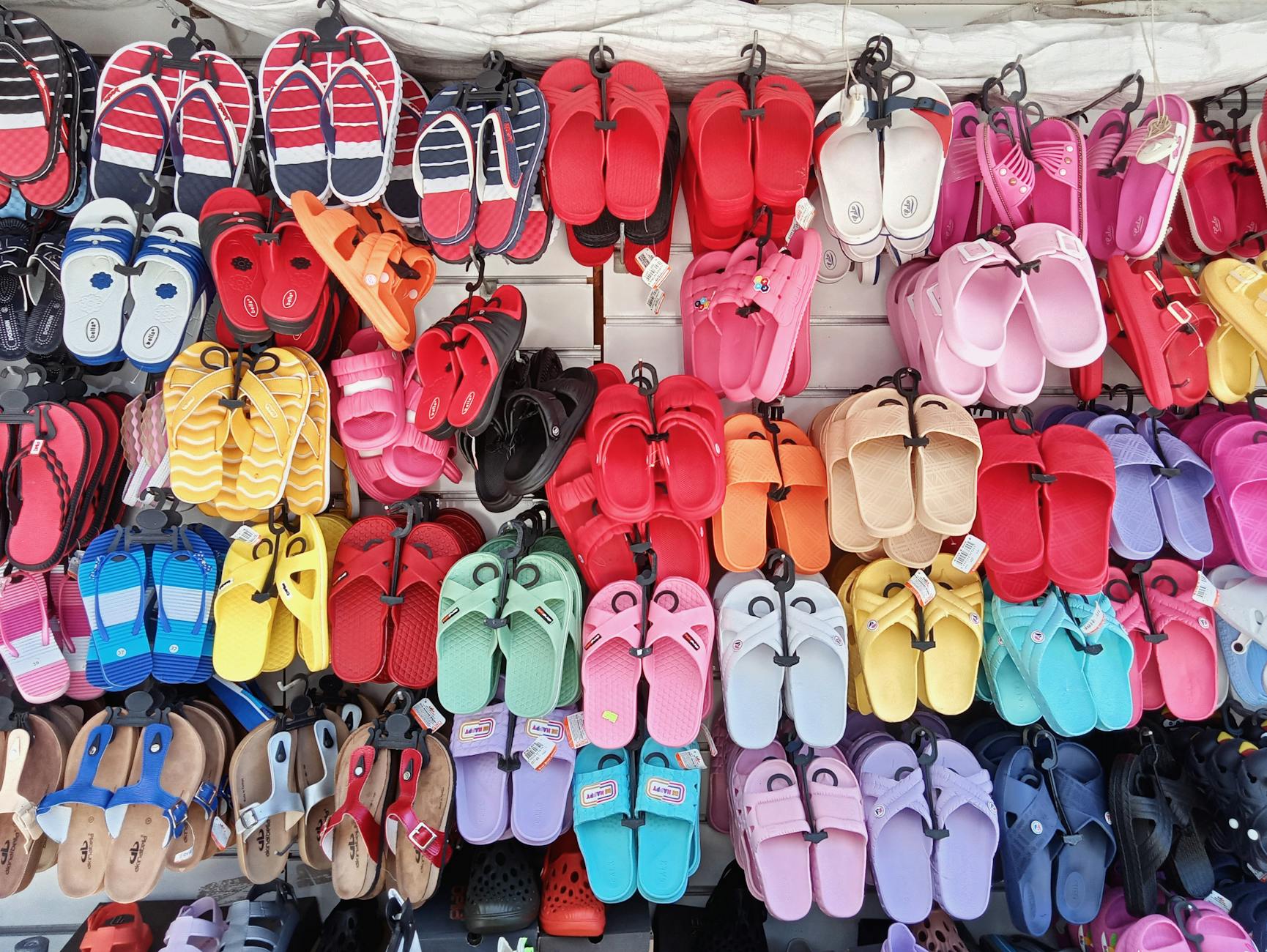
You're halfway to the beach. The sun is blazing, the car smells like sunscreen, and you just realized — you forgot your flip-flops. Sound familiar? You're not alone. And this one tiny, recurring moment of frustration has quietly grown into one of the most powerful forces in the $23 billion global flip-flop market.
The Impulse Purchase Nobody Talks About
Most people think of impulse buying in terms of candy bars near the checkout line or a magazine you didn't plan on grabbing. But footwear? That's a different story — and the numbers are catching up.
According to Polaris Market Research, the global flip-flop market was valued at $23.13 billion in 2024 and is projected to grow at a compound annual growth rate (CAGR) of 3.8% through 2034. That's not a category in decline — that's a category in motion, driven largely by one simple, underserved use case: people who need sandals right now, right here, without planning ahead.
"That gap — between where people shop and where flip-flops actually live on store shelves — is the $23 billion problem nobody has fully solved."
Why the Traditional Retail Model Fails Sandal Shoppers
Walk into most shoe stores and you'll find flip-flops organized by size, color-coordinated on pegboards, and buried deep in the sandals section. That's fine if you've planned a shopping trip. But what about the tourist who left their sandals at the hotel? The parent at the water park whose kid's strap just broke? The traveler who packed everything but beach shoes?
These consumers don't want to browse a shoe department. They want to grab-and-go. And that gap — between where people shop and where flip-flops actually live on store shelves — is the $23 billion problem nobody has fully solved.
The Rise of Convenience Retail Footwear
Here's what the data tells us about where people are shopping: there are over 150,000 convenience stores across the United States. Over 38,000 supermarkets. Tens of thousands of pharmacies, beach shops, resort gift shops, and general merchandise outlets. These locations see millions of daily footfall from consumers who are already in buying mode.
And yet, a large percentage of these locations either stock no sandals at all, or carry poorly merchandised, hard-to-find options buried in general merchandise aisles. The opportunity to place bold, colorful, display-ready flip-flops at the point of impulse — the checkout zone, the end-cap, the resort lobby — remains largely untapped.
What Consumers Actually Want
In a survey of 345 Florida Publix shoppers, the feedback was resoundingly clear: people want convenient, affordable sandal options available where they already shop. About 75% preferred traditional thong-style flip-flops. Nearly all respondents responded positively to the idea of grab-and-go sandals available in grocery and convenience stores — citing convenience, bright colors, and comfort-forward design as key drivers.
This isn't just anecdotal. Grand View Research confirms the men's segment of the global flip-flop market is growing at approximately 3.3% CAGR. Tourism recovery in warm-weather states like Florida — which sees over 140 million annual visitors — is fueling demand for exactly the kind of last-minute footwear purchase that traditional retail has never fully accommodated.
Tailwinds Driving the Flip-Flop Market
- Post-pandemic travel rebound driving beach and resort tourism to record levels
- Casualization of fashion — open-toe footwear worn beyond the beach, in everyday settings
- Growing consumer preference for value-driven, accessible fashion
- Expansion of warm-weather residential markets in Florida, Texas, California, and Arizona
- Rising domestic tourism creating new impulse purchase environments at hotels, airports, and resorts
The Solution: Display-First Footwear for the Modern Shopper
The smartest players in this space aren't just making better flip-flops — they're rethinking how flip-flops reach consumers. The display-first model, where bright, bold footwear is packaged in ready-to-deploy end-cap displays that require zero setup time, is emerging as the answer to the $23 billion problem.
Retailers benefit from instant merchandising with no fixtures, planograms, or labor. Consumers get the grab-and-go experience they're instinctively looking for. And brands capture the impulse moment that traditional footwear retail has always missed.
The Bottom Line
The next time you forget your flip-flops, remember: that frustration represents a market opportunity worth $23 billion — and it's growing. The brands and retailers smart enough to meet consumers where they are, at the grocery store, the convenience outlet, the resort gift shop, with a product that's impossible to miss and effortless to buy, are poised to capture a category that's been hiding in plain sight.